Malaysia
Malaysia
Singapore
Indonesia
Brunei
India
+603-2276 1881 SynergenOG Sdn Bhd
+65 861 84 148 Synergen Oil & Gas Pte. Ltd
+62 2150 897100 PT. SynergenOG Indonesia
+673 233 9270 SynergenOG (B) Sdn. Bhd.

Category

Technical Risk Management
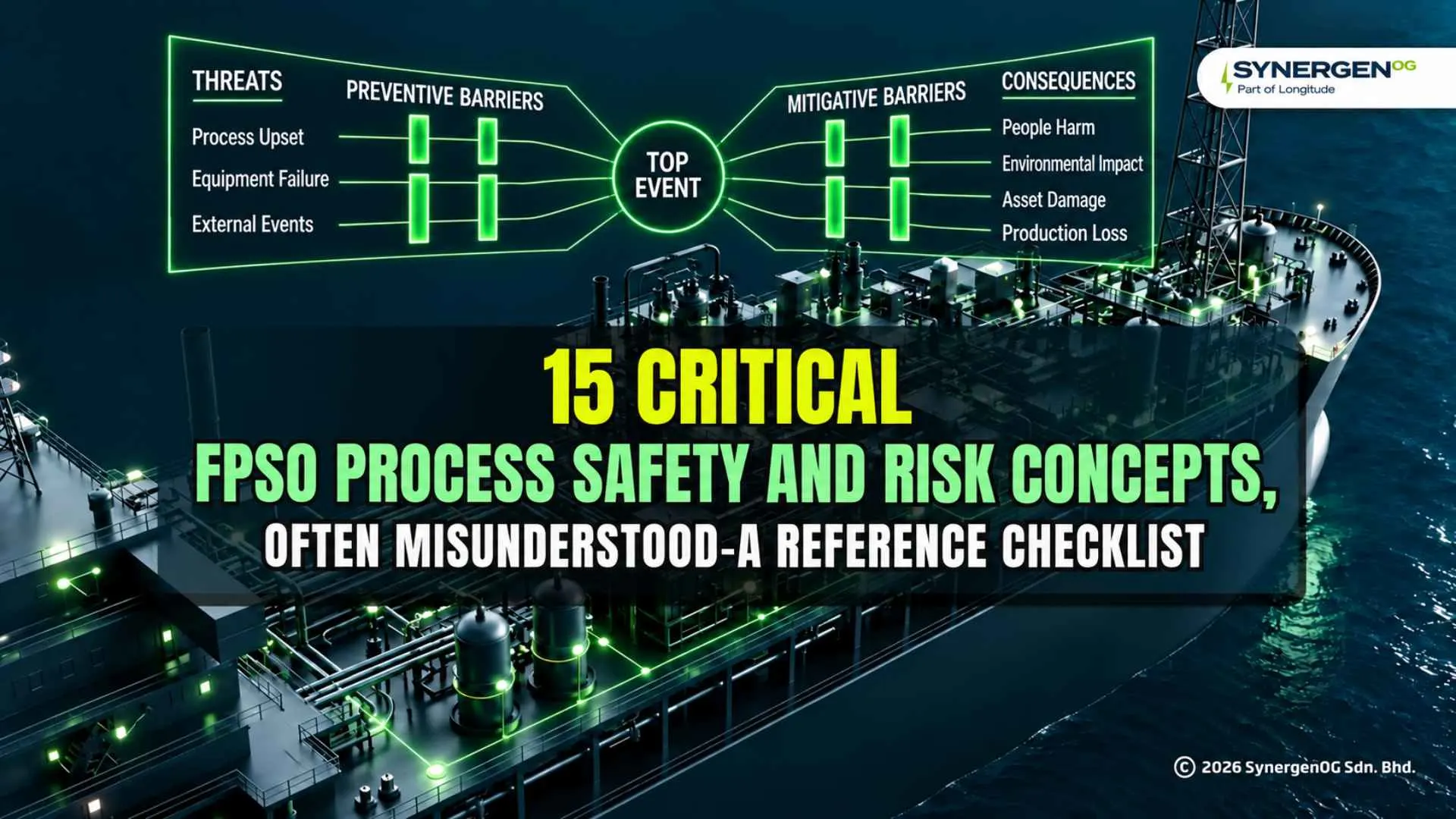
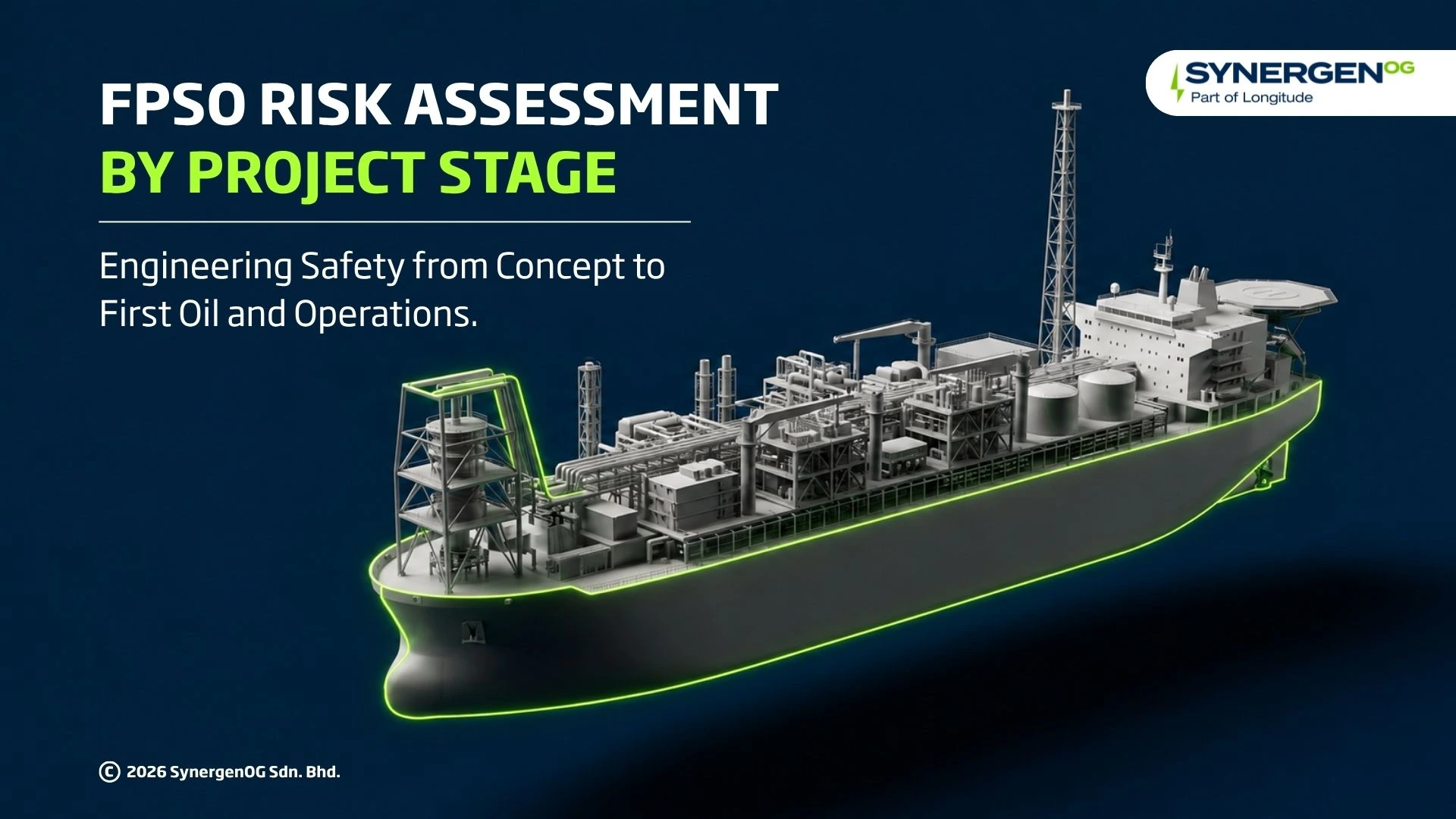
FPSO risk assessment
Which Safety Studies Does an FPSO Project Need? FPSO safety studies typically progress from broad hazard identification and concept risk screening to detailed hazard analysis, quantitative risk assessment, fire and explosion assessment, safeguard verification and operational readiness. Depending on project stage, design maturity, regulatory regime and risk profile, the programme may include HAZID, HAZOP, QRA, FERA,...
Continue Reading
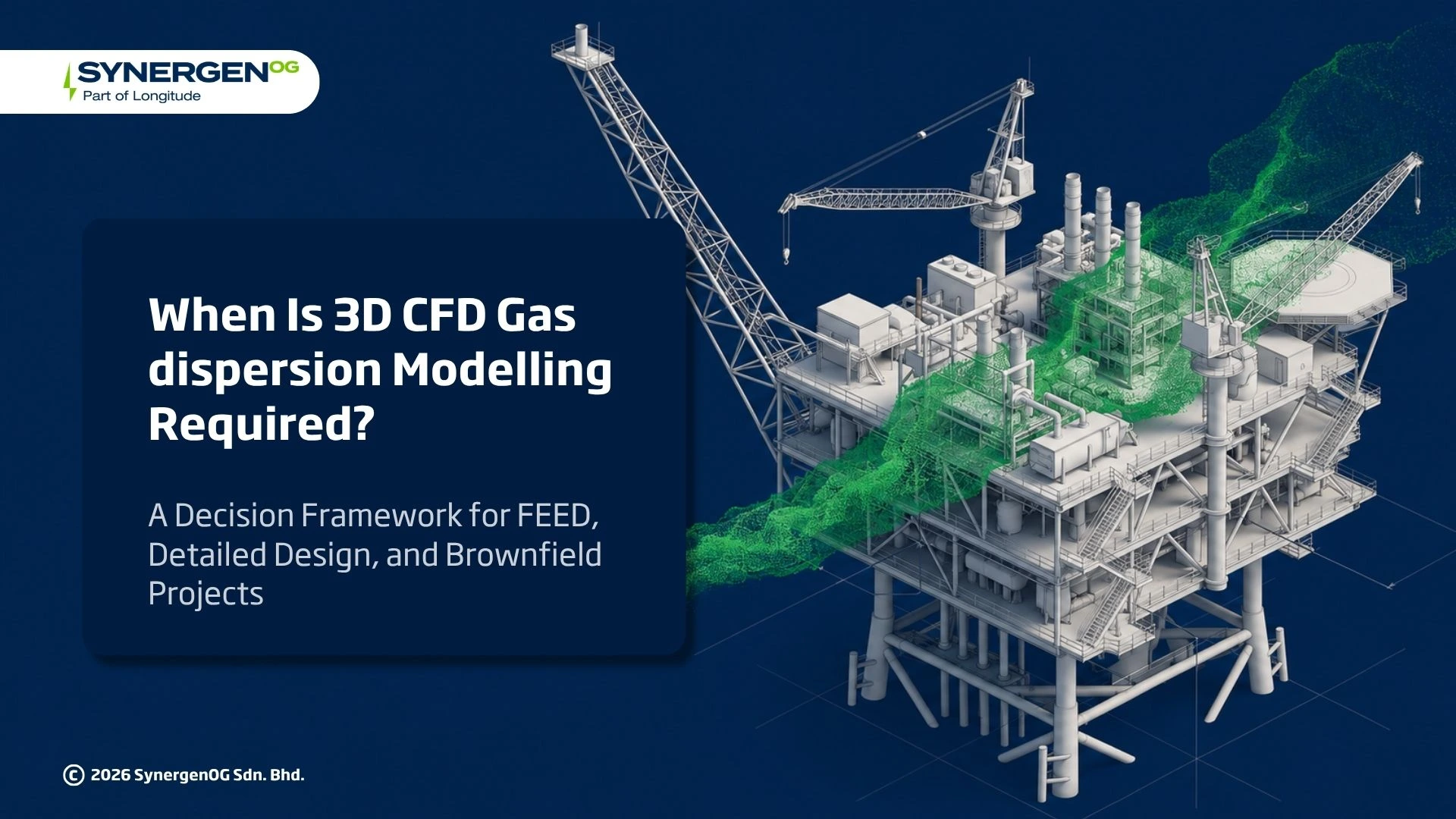
when is 3d cfd gas dispersion modelling required
Summary: When is 3D CFD required in gas dispersion modelling? 3D CFD isn’t usually named as a legal requirement. UK and Australian rules apply the ALARP principle instead; US rules ask for a documented hazard analysis; Norway’s NORSOK standards build CFD into recognised offshore practice, though they’re industry standards, not statutes. In practice, CFD becomes...
Continue Reading
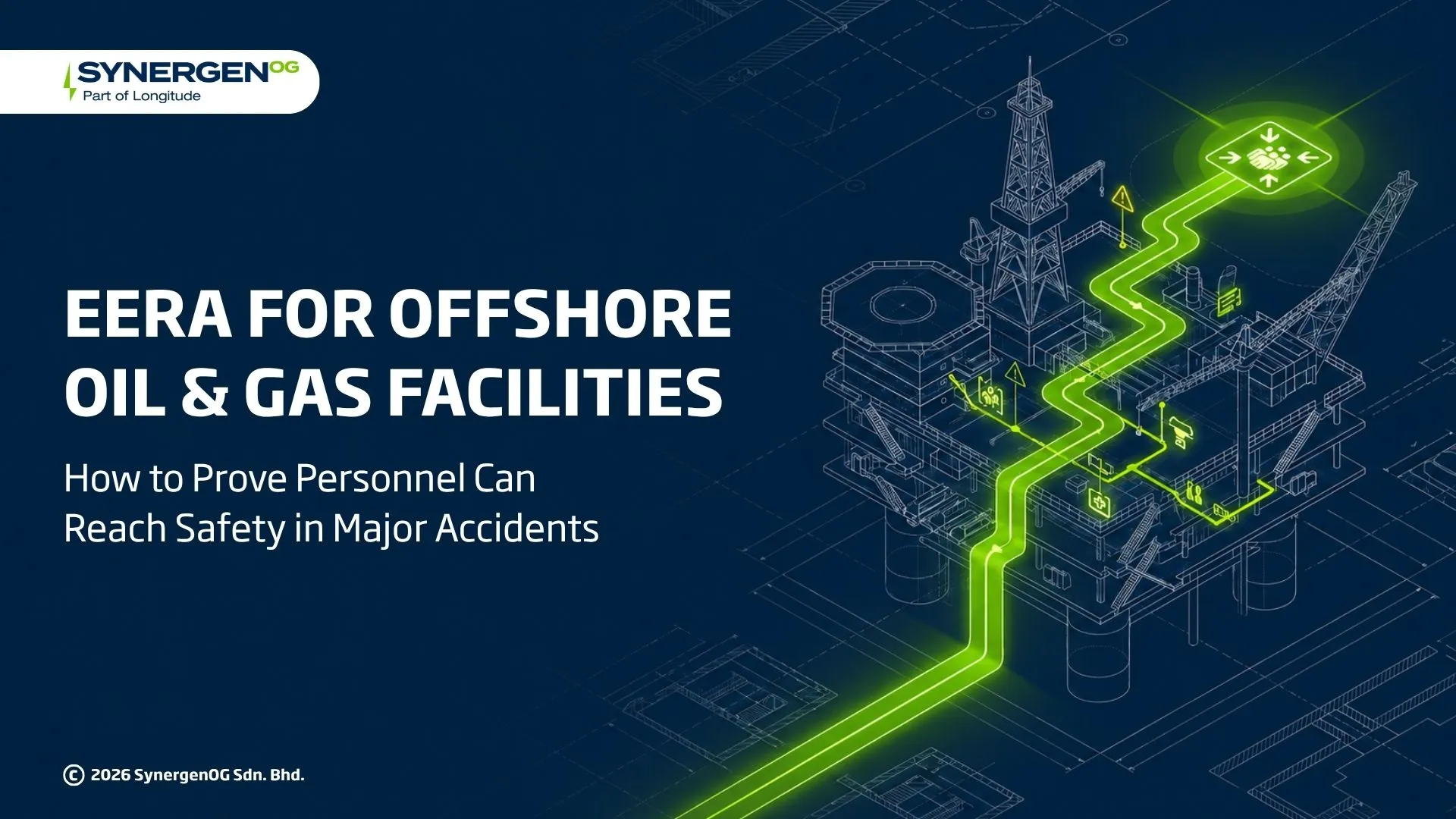
EERA - Escape Evacuation and Rescue for offshore facilities
Summary: EERA—Evacuation, Escape and Rescue Analysis—tests whether offshore personnel can respond to a major accident, reach a suitable muster area or Temporary Refuge, and leave or escape the installation with a credible prospect of recovery and rescue. In the UK, PFEER regulation 5 requires this assessment and measurable performance standards for each credible scenario. It...
Continue Reading
when is a fera study required in oil and gas projects
Summary: Imagine finalizing your facility design, only to discover late in the project that your layout cannot withstand a credible explosion scenario. This is exactly the kind of costly oversight a FERA study is meant to prevent, but only if it’s conducted at the right time. This is what this article explains: What is a...
Continue Reading
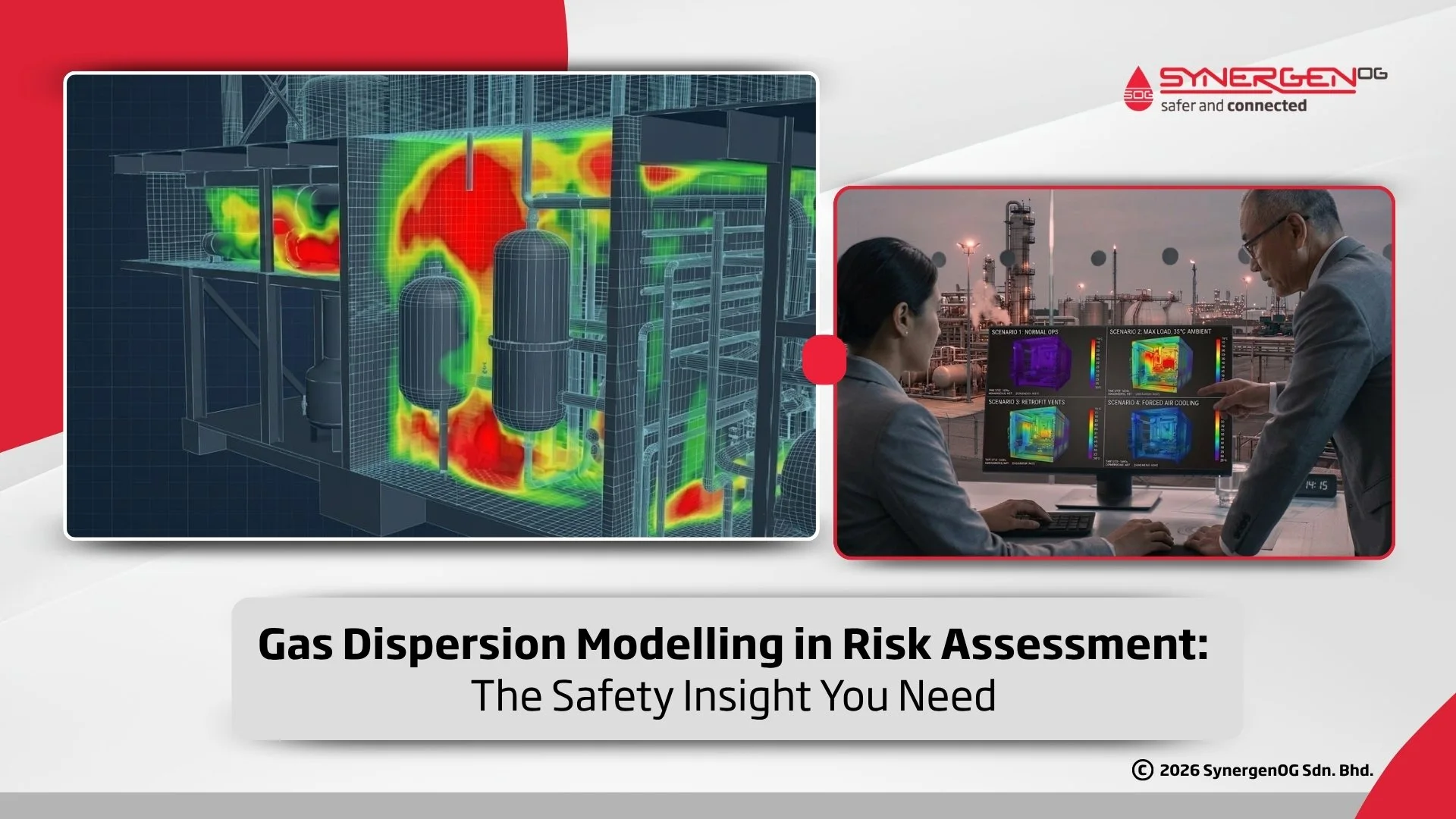
What is gas dispersion modelling in risk assessment? Dispersion analysis is the simulation of how a hazardous gas release moves, dilutes, and settles after a leak. It is a core part of quantitative risk assessment (QRA) because it helps safety teams predict toxic and flammable hazard zones, improve gas detector mapping, and support compliance and...
Continue Reading
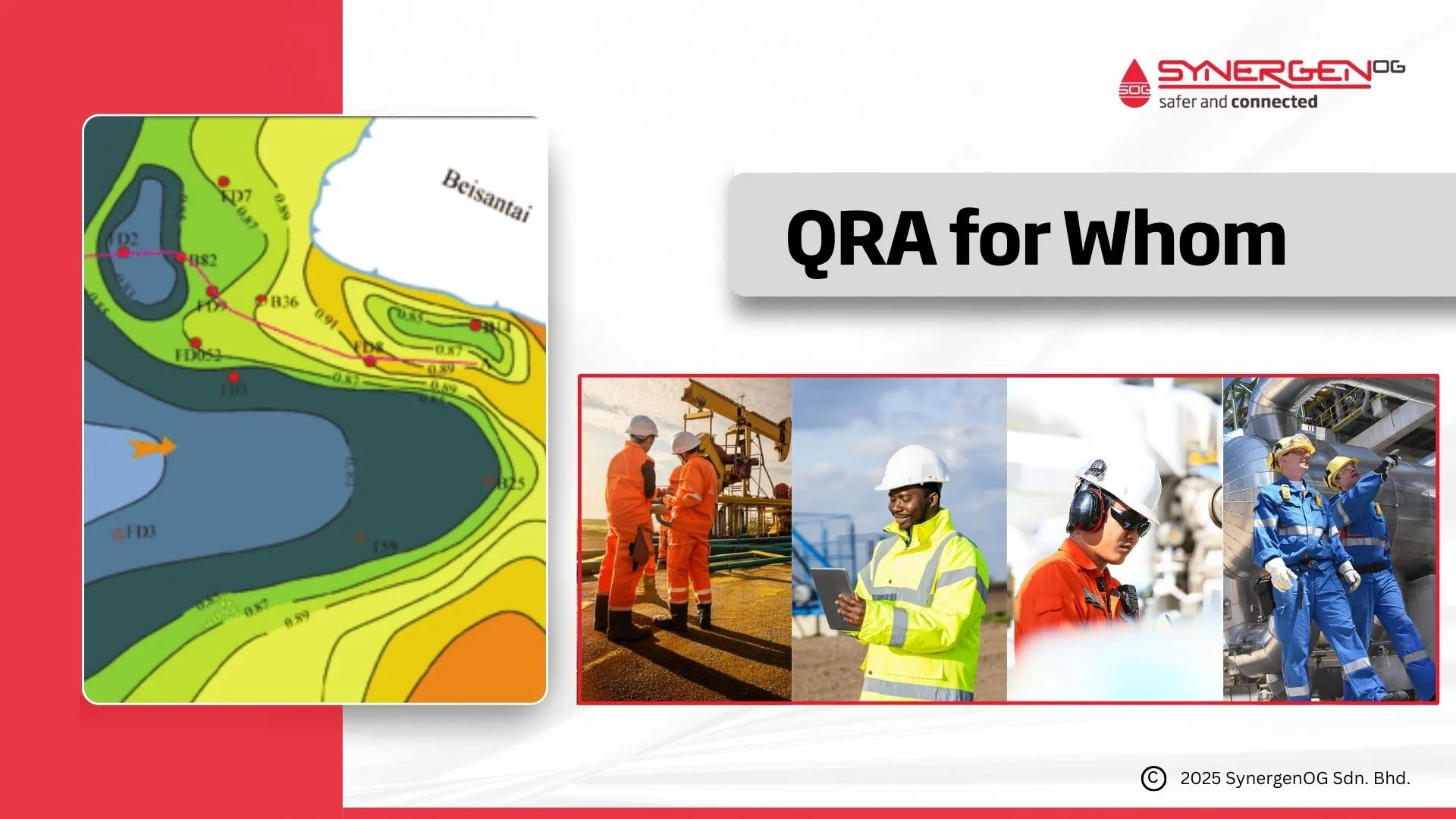
QRA for whom , QRA for stakeholders
Summary: This article explains how Quantitative Risk Assessment (QRA) serves different stakeholders—not just as a compliance tool, but as a practical decision engine. It shows how to tailor QRA outputs for executives, project teams, PSM and operations, regulators, insurers, emergency planners, investors, and communities using tools like IR contours, F-N curves, and more. Quantitative Risk...
Continue Reading
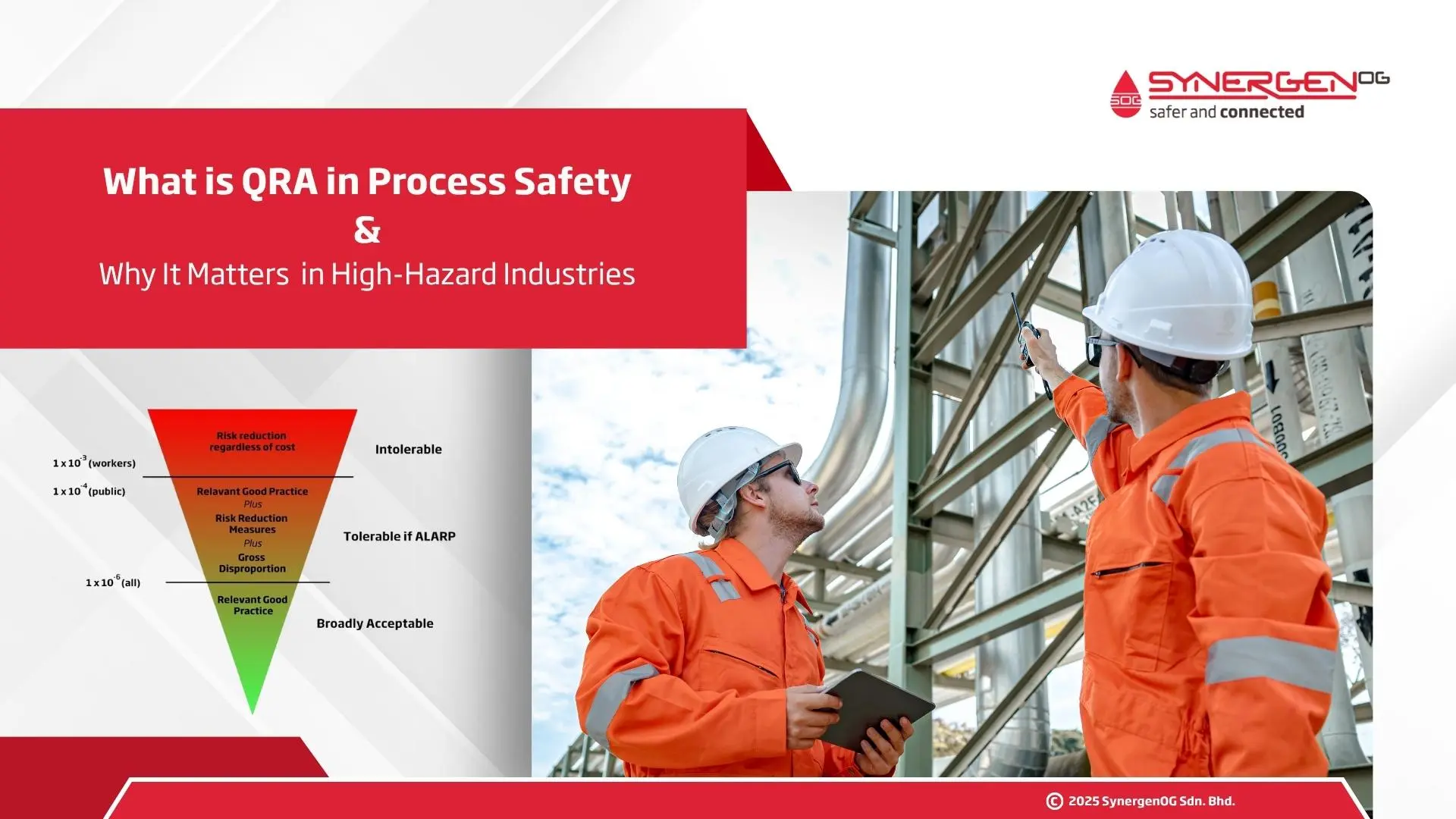
What is QRA in process safety
Summary: Quantitative Risk Assessment (QRA) is a structured, data-driven method that estimates how often hazardous events could happen and how severe their consequences could be. By combining frequency analysis with consequence modeling, QRA quantifies individual and societal risk to guide ALARP decisions, safeguard design, emergency planning, and regulatory compliance. What Is QRA? If you’ve ever...
Continue Reading
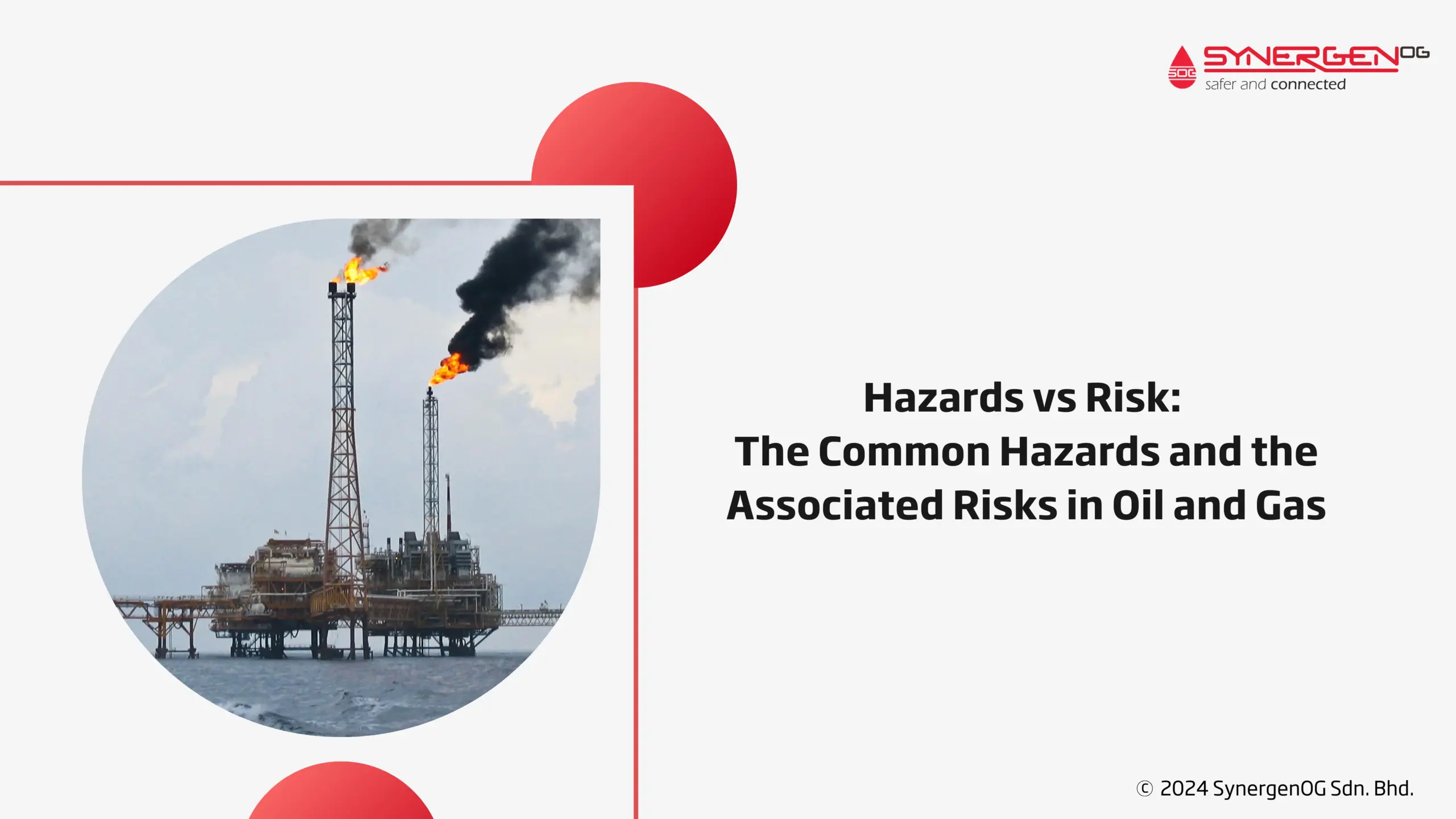
Hazard Vs Risk in oil and gas
Summary: What is a hazard and what is a risk? Explaining the 2 terms in context of oil and gas sector with examples here. By understanding these concepts, industry professionals can significantly enhance safety measures and minimize potential threats to both workers and the environment. The oil and gas sector, essential for global energy, is...
Continue Reading
sil determination - step by step guide
Summary: How to determine the SIL of a particular SIF function? What are the SIL determination methods available? This article aims to explore and evaluate various methods for determining the appropriate Safety Integrity Level (SIL) for safety instrumented functions (SIFs) in industrial processes.  Going deep into the structured approaches such as Risk Graphs, Layer of...
Continue Reading
sil classification - what is sill assessment
Summary: What are the 4 types of SIL? What is the difference between SIL 1, SIL 2, SIL 3 & SIL 4? This article aims to provide a thorough overview of SIL classification and the significance of SIL in SIF and SIS in the context of oil and gas. Although SIL determination is not just...
Continue Reading
1 2
Happy to Help !