Temporary Refuge Impairment Analysis (TRIA) is a critical component of technical risk management, conducted to assess the effectiveness of temporary refuges in supporting escape, muster, evacuation, and rescue during major accident hazards (MAH). This analysis identifies potential mechanisms that could impair the functionality of temporary refuges, including,
Smoke and gas ingress
Heat build-up from personnel
Oxygen depletion
Carbon monoxide build-up in the bloodstream
Fire impingement
Explosion overpressure
Importance of TRIA
TRIA is crucial for maintaining a robust emergency response plan. By understanding potential impairments, organisations can implement necessary measures to mitigate risks and ensure the effectiveness of temporary refuges in protecting personnel.

SynergenOG’s Expertise in TRIA Analysis
At SynergenOG, our unwavering commitment to safety within the process industry extends to Temporary Refuge Impairment Analysis (TRIA) under risk management and mitigation. With a proven history of excellence in evaluating and mitigating risks within temporary refuge areas, we guarantee that your operations meet the most stringent safety standards.
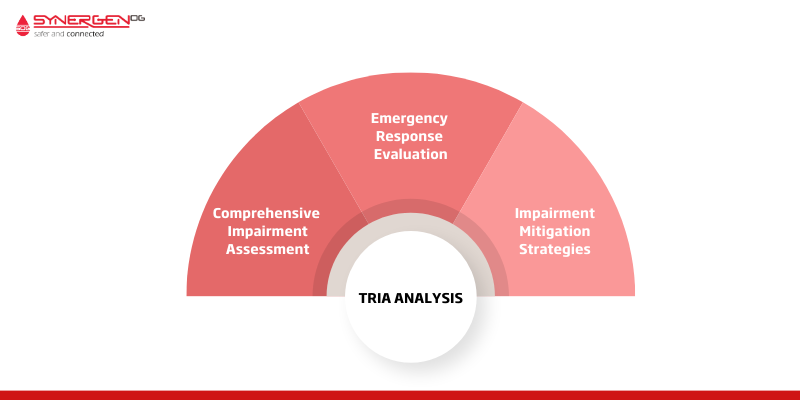
Comprehensive Impairment Assessment
Thorough analysis of temporary refuge areas
Identifying potential hazards and impairment risks
Detailed numerical representation of impairments
Emergency Response Evaluation
Assessing the effectiveness of emergency response plans for temporary refuges
Ensuring personnel safety during critical moments
Impairment Mitigation Strategies
Recommending strategies to reduce impairment risks
Implementing measures to enhance safety in temporary refuge area