
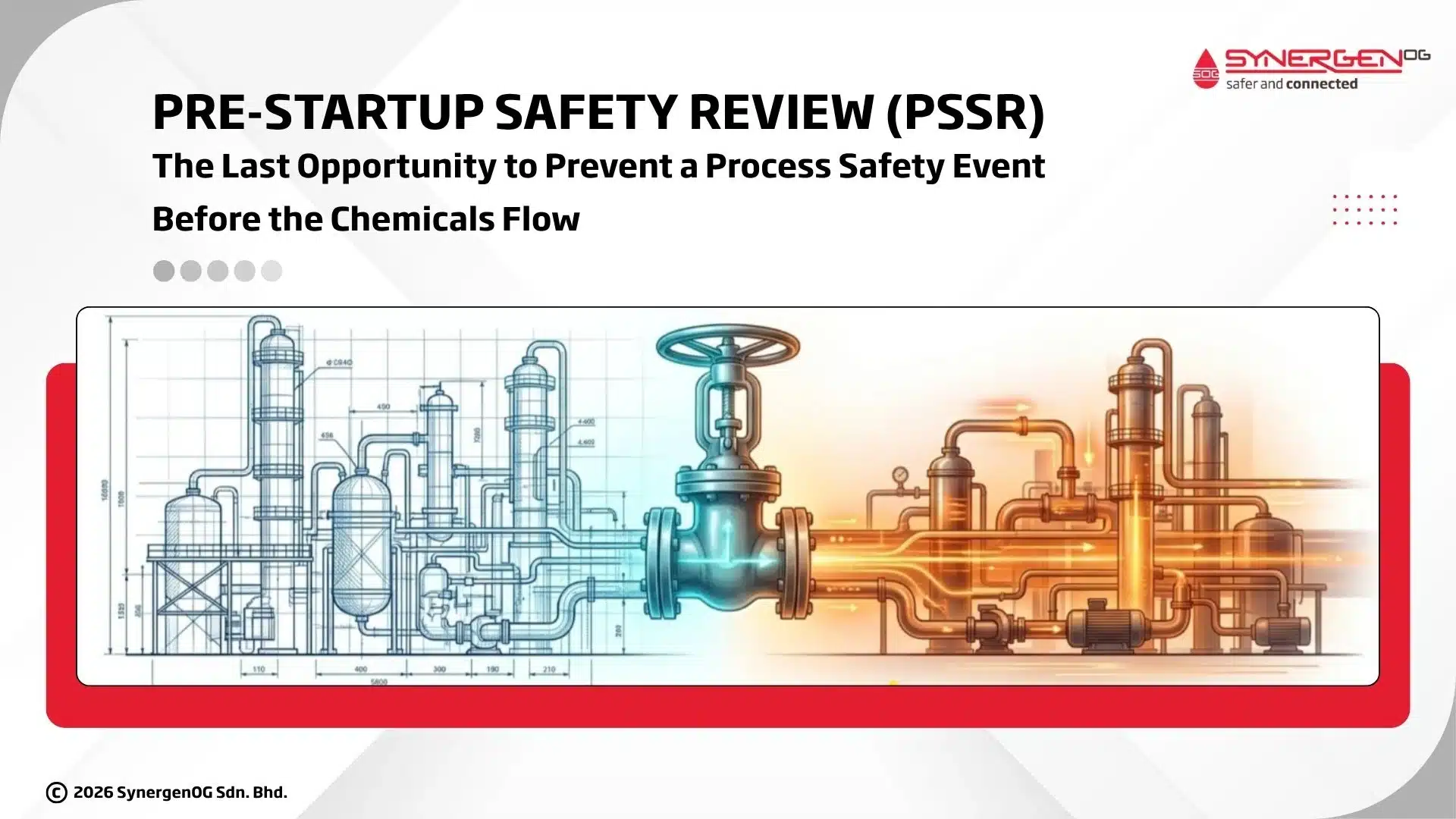
When a plant is approaching startup, the project can look finished long before it is truly safe to operate. Equipment may be installed. Procedures may be circulating. Commissioning may be underway. But once highly hazardous chemicals enter the system, small gaps can quickly escalate into startup delays, loss events, or serious process safety incidents.
That is why the Pre-Startup Safety Review (PSSR) matters.
What is a Pre-Startup Safety Review?
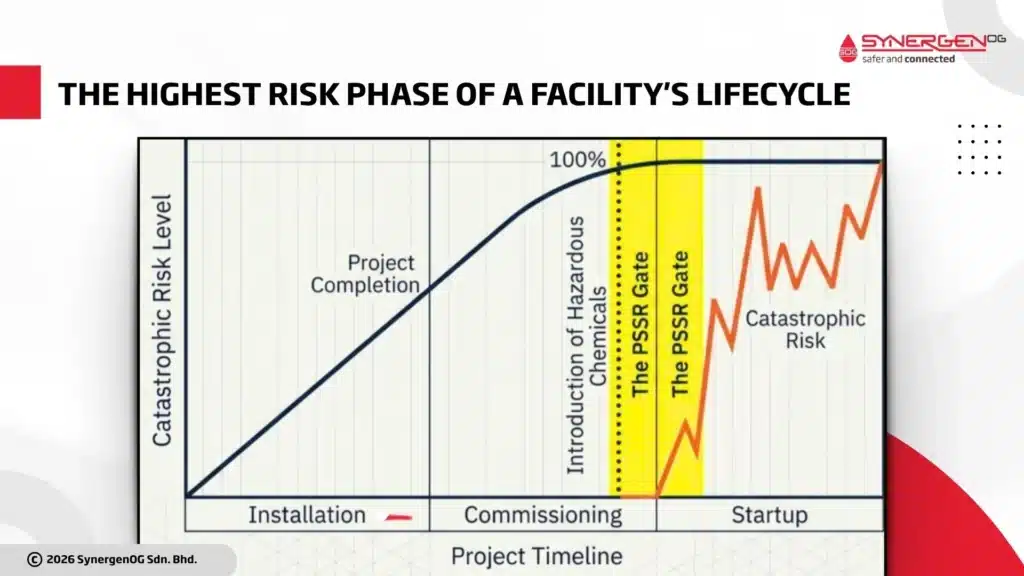
A Pre-Startup Safety Review is a formal pre-startup verification carried out before hazardous chemicals are introduced into a new or significantly modified covered process. Its purpose is to confirm that the process has been built correctly, documented correctly, safeguarded appropriately, and handed over to trained personnel who are ready to operate it safely.
OSHA’s requirement is explicit in 29 CFR 1910.119(i), and EPA’s Program 3 prevention program contains the same core framework for covered stationary sources.
In short,
PSSR is the final structured safety review performed before startup to verify that a new or modified covered process is safe to place into operation.
Why PSSR matters
Startup is one of the most risk-sensitive phases in the lifecycle of a process facility. During this period, systems move from installation and testing into live operation with flammable, toxic, reactive, or explosive materials. OSHA’s PSM framework exists to prevent or minimize catastrophic releases of these chemicals, and PSSR is one of the program elements intended to stop foreseeable failures before startup begins.
A strong PSSR helps catch issues that often remain hidden until the last minute, such as:
- Field installation that no longer matches the approved design
- Operating procedures that reflect an earlier project revision
- Incomplete alarm, trip, or interlock verification
- Unresolved hazard-review actions
- Open punch items that affect startup risk
- Operator training that is formally recorded but not practically complete
The reason this matters is simple: “almost ready” is not an acceptable standard once hazardous chemicals are introduced.
When is a PSSR required?
Under OSHA, a PSSR is required:
- Before the startup of a new covered process
- Before the startup of a modified covered process, when the modification is significant enough to require a change in process safety information
OSHA enforcement guidance reinforces this by asking whether a PSSR was performed for all new facilities and for modified facilities where process safety information changed.
In practice, that means PSSR is not limited to large greenfield projects. It may also apply to:
- Revamps
- Tie-ins
- Brownfield modifications
- Control system upgrades
- Debottlenecking projects
- Relief-system changes
- Sequence or shutdown-logic changes
- Operating envelope changes that alter process safety information
OSHA PSSR requirements
OSHA requires the pre-startup safety review to confirm that, before highly hazardous chemicals are introduced:
- Construction and equipment are in accordance with design specifications
- Safety, operating, maintenance, and emergency procedures are in place and are adequate
- For new facilities, a process hazard analysis has been performed, and recommendations have been resolved or implemented before startup
- Training of each employee involved in operating the process has been completed
These four points are what make PSSR more than a checklist. The regulation itself ties the review to hardware readiness, documentation quality, hazard-review closure, and workforce readiness.
What should a PSSR verify before startup?
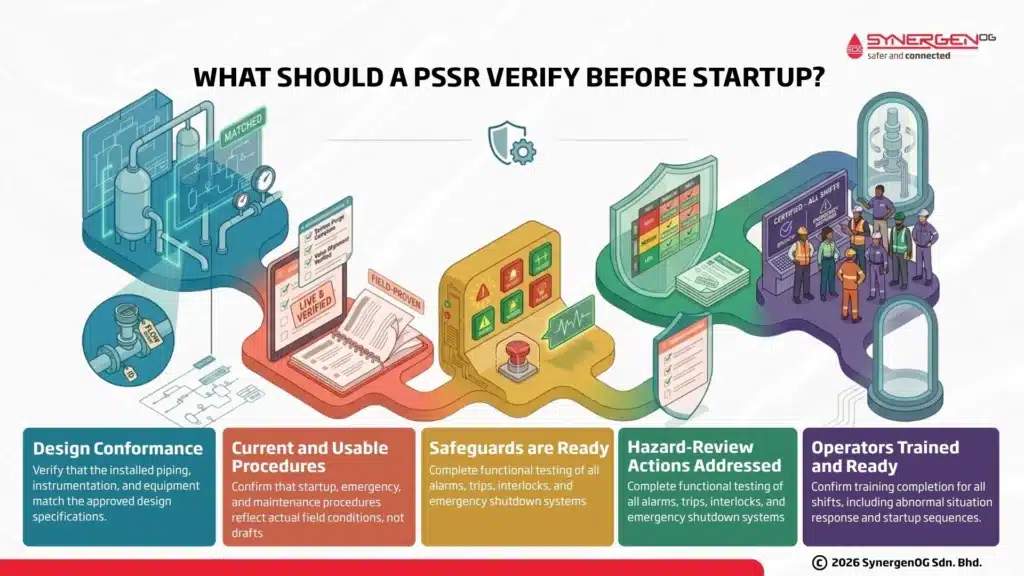
A strong PSSR should verify the following areas.
1. Design conformance
The installed process should match the approved design and the current process safety information.
Check:
- Piping, valves, and line routing
- Instrumentation and control loops
- Relief devices and vent paths
- Shutdown devices and permissives
- Materials of construction
- Utility connections
- Electrical and hazardous-area requirements
2. Procedures are current and usable
Procedures must reflect the actual field condition, not a draft version from earlier in the project.
Check:
- Startup procedures
- Normal operations
- Temporary operating instructions
- Shutdown procedures
- Emergency response steps
- Alarm response guidance
- Maintenance interfaces and permit requirements
OSHA specifically requires safety, operating, maintenance, and emergency procedures to be in place and adequate before startup.
3. Safeguards are ready
Protective functions need to be installed, configured, and meaningfully checked.
Check:
- Alarms
- Trips
- Interlocks
- Emergency shutdown functions
- Fire and gas system interfaces
- Cause-and-effect logic
- Permissives and startup inhibits
4. Hazard-review actions are addressed
Hazard-review recommendations cannot simply be deferred without evaluating startup risk.
Check:
- PHA and HAZOP action closure
- Startup-critical punch items
- Risk-ranked open actions
- Approved temporary mitigations
- Responsible owners and due dates
For new facilities, OSHA requires PHA recommendations to be resolved or implemented before startup.
5. Operators are trained and ready
Training is not just an HR record. It is a readiness requirement.
Check:
- Training completion records
- Startup-specific briefings
- Role clarity during startup
- Abnormal situation response
- Shift-wide readiness, not just day-shift readiness
- Handover from project to operations
OSHA has cited employers for failing to confirm that training was completed before highly hazardous chemicals were introduced.
Practical PSSR checklist
Below is a typical PSSR checklist block.
Engineering and installation
- Does the field installation match the latest approved P&IDs?
- Are valve lineups, blinds, and temporary connections correctly controlled?
- Are relief, drain, and vent systems aligned with design intent?
- Have temporary commissioning aids been removed or formally managed?
Documentation
- Are P&IDs, line lists, and logic documents current?
- Do startup procedures reflect the as-built configuration?
- Are emergency procedures available and relevant to actual startup conditions?
- Are operating limits and alarm responses documented?
Controls and protective systems
- Were alarms, trips, and interlocks tested and documented?
- Are setpoints, permissives, and overrides known and controlled?
- Has shutdown logic been verified?
- Are fire and gas interfaces available where applicable?
Readiness and handover
- Has each operator completed the required training?
- Do all shifts understand the startup sequence and escalation steps?
- Has operations formally accepted turnover?
- Is final startup authorization explicit and documented?
PSSR vs MOC vs Commissioning
These three terms are closely related, but they do different jobs.
PSSR
PSSR is the final readiness review before startup. Its job is to confirm the process is safe to place into service.
MOC
Management of Change is the system for reviewing and controlling changes before and during implementation. OSHA enforcement guidance explicitly treats MOC and PSSR as separate PSM elements.
Commissioning
Commissioning is the practical preparation and testing of systems to ensure they operate as intended. It supports readiness, but it is not a substitute for PSSR.
The simplest distinction
- MOC manages the change
- Commissioning tests and prepares the system
- PSSR verifies safe startup readiness
That distinction matters because a project can be commissioned and still fail PSSR if procedures are incomplete, training is unfinished, or the field installation does not match design intent.
Common PSSR gaps
The issues found during PSSR are usually not dramatic. They are the ordinary loose ends that survived project closeout pressure.
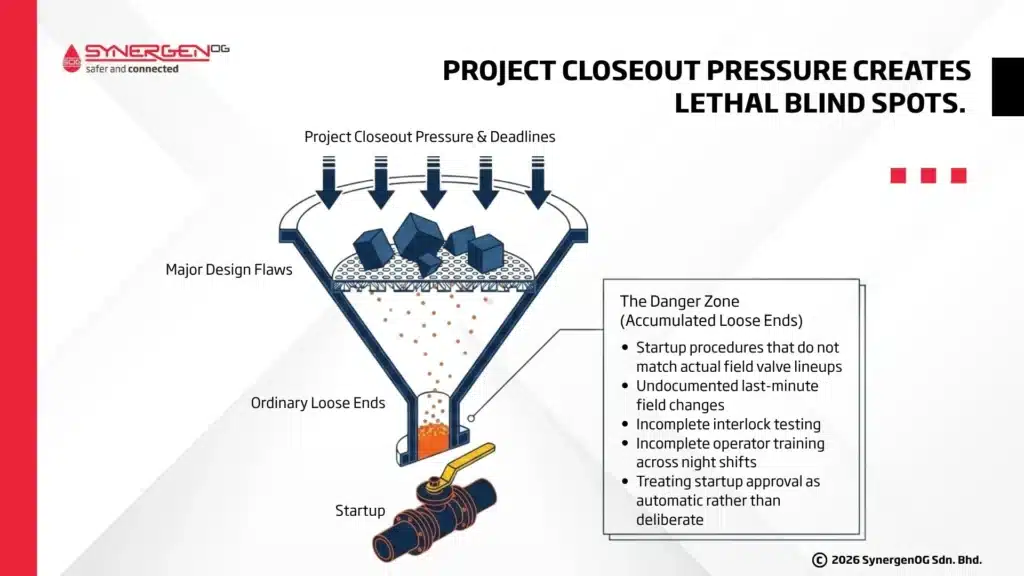
Common examples include:
- Updated P&IDs
- Startup procedures that do not match actual valve lineups
- Incomplete interlock testing
- Open hazard-review recommendations
- Undocumented last-minute field changes
- Weak turnover between the project and operations
- Incomplete operator training across all shifts
- Startup approval is treated as automatic rather than deliberate
Best practices for a stronger PSSR process
The best PSSR systems are usually not the most complex. They are the most disciplined.
What good practice looks like
- Use a defined and documented review process
- Involve operations, engineering, maintenance, instrumentation, and project teams
- Combine document review with field verification
- Distinguish minor closeout items from startup-critical risks
- Assign ownership for unresolved actions
- Require explicit startup authorization
What weak practice looks like
- Paperwork-only signoff
- Desktop review without field walkdown
- Unresolved startup-critical punch items
- Poor linkage between MOC, commissioning, and turnover
- Training is treated as administrative rather than operational
Conclusion
A Pre-Startup Safety Review is one of the last opportunities to prevent a startup problem from becoming a process safety event. OSHA’s requirements make the minimum standard clear: the process must be built as designed, documented adequately, reviewed for hazards, and handed over to trained operators before highly hazardous chemicals are introduced. EPA’s Program 3 rule reinforces the same principle for covered stationary sources.
That is why PSSR should be treated as an operational-readiness decision rather than a box-ticking exercise.
Pre-Startup Safety Review Frequently Asked Questions
- Does EPA also require a pre-startup review?
Yes. EPA’s Risk Management Program requires a pre-startup review under 40 CFR 68.77 for covered Program 3 stationary sources.
- When should a PSSR be performed?
A PSSR should be completed before highly hazardous chemicals are introduced into a new or significantly modified covered process. Under EPA’s Program 3 prevention program, a parallel pre-startup review is required before regulated substances are introduced.
- What is the difference between PSSR and MOC?
MOC controls the change. PSSR confirms the changed or new process is ready for safe startup. OSHA enforcement guidance treats them as separate PSM elements.
- What does a PSSR checklist include?
A strong PSSR checklist includes design verification, current procedures, safeguard readiness, closure of hazard-review actions, completed operator training, and documented startup approval. OSHA’s required confirmation points are design conformance, adequate procedures, resolved or implemented PHA recommendations for new facilities, and completed employee training.
- Is PSSR required by OSHA?
Yes. OSHA requires a PSSR under 29 CFR 1910.119(i) for new covered processes and for modified covered processes when the modification is significant enough to require a change in process safety information.
Technical Note: This article provides general technical guidance on Pre-Startup Safety Review practices. Specific PSSR requirements may vary depending on the facility, regulatory framework, company standards, and project risk profile. Before making startup decisions, organizations should verify requirements against applicable regulations, internal procedures, and competent process safety advice.
References:
- https://www.aiche.org/ccps/resources/glossary/process-safety-glossary/pre-startup-safety-review-pssr
- https://www.hse.gov.uk/comah/sragtech/techmeasoperatio.htm
- https://ccps.aiche.org/publications/books/guidelines-performing-effective-pre-startup-safety-reviews
- https://publications.aiche.org/cep/2022/june/conduct-effective-pre-startup-safety-review
- https://www.osha.gov/enforcement/directives/cpl-2-245a-ch-1
- https://www.marsh.com/content/dam/marsh/Documents/PDF/UK-en/Engineering%20Position%20Paper%20Pre-Start-Up%20Safety%20Review-03-2016.pdf